
LATEST MEWS

Company: Shenzhen Rev Laser Equipment Co., Ltd
Website: www.revlaser.com. cn
Address: 2nd Floor, Building A, Tongfuhan Haida Innovation Park, No. 10 Jiangfu Road, Matian Street, Guangming District, Shenzhen
Mobile: +86-15889513597
Email: revlaser@163.com
Industry News
HomeIndustry NewsDetails
LCD Laser Repair Machine: Applications & Principles
Publish: 2026-04-11 18:49:21 Update: 2026-04-13 10:00:44 View: 390Amid rapid evolution in the display industry and rising demand for precision manufacturing, laser technology has become a core enabler in electronics manufacturing, delivering unmatched precision, efficiency and environmental friendliness.
With years of expertise in laser equipment, Shenzhen Leifu Automation Equipment Co., Ltd. has broken through industry technical barriers with its self-developed LCD laser repair machine, providing panel manufacturers with a reliable solution to improve yield and reduce production costs. Meanwhile, the unique working principle of laser light is the key to its extensive industrial applications.
LCD Laser Repair Machines: Safeguarding Panel Manufacturing Yield
As a core component of TVs, monitors, mobile devices and other end products, LCD panels require highly sophisticated manufacturing processes. Even minor deviations during glass substrate processing, circuit etching and other steps can result in bright spots, dark spots, broken lines or vertical color lines, directly impairing product quality and economic efficiency.
Traditional repair methods have long suffered from low accuracy and low efficiency, leading to massive scrapping of defective panels and severe resource waste.
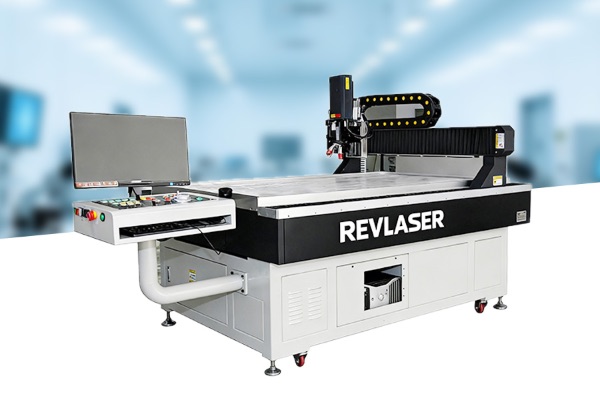
Building on years of experience in LCD panel repair, Leifu Laser has launched a series of LCD-OLED laser repair systems, including models REV‑A100‑SD and REV‑750‑ZD. These machines serve as critical solutions for panel manufacturers, widely applied in production, rework and quality control across the entire display industry chain.
Leifu Laser provides after-sales technical services and equipment support to leading panel manufacturers worldwide, accumulating extensive practical experience.
In a case study at a top-tier domestic panel maker, its 8.6G LCD line was plagued by persistent bright spots and vertical color lines. Under traditional repair, the line scrapped more than 30 panels daily with a yield rate of only about 75%, driving high production costs.
After adopting Leifu’s REV‑A100‑SD and REV‑750‑ZD repair machines, daily scrap volume dropped below 5 units, yield exceeded 90%, and monthly cost savings surpassed 2 million RMB — a powerful demonstration of the equipment’s value.
The machine integrates the high-performance REV‑3018 laser engine, precision optical imaging system and three‑axis (X/Y/Z) manual‑electric focusing platform, supported by a stable granite base for exceptional accuracy and reliability.
It supports full‑size LCD panels ranging from 15.6 inches to 120 inches, achieving micron‑level repair down to 3μm × 3μm with a success rate above 90%. It typically improves panel yield by approximately 15%, significantly reducing scrap losses and enhancing operational efficiency.
Beyond LCD panel repair, Leifu’s laser systems also serve high‑end optoelectronics and high‑precision PCB/FPC manufacturing in integrated circuits. By repairing micro circuit defects, the equipment prevents entire board scrappage and helps improve PCB/FPC yield by more than 12%.
For large‑format applications, Leifu provides customized solutions for 65–120 inch panels, further expanding the scope of industrial applications.
How Lasers Work: From Atomic Transitions to Precision Processing
The exceptional precision of laser repair stems from its unique physical principles.
LASER stands for Light Amplification by Stimulated Emission of Radiation, a concept first proposed by Albert Einstein in 1917. The first functional laser was successfully developed in 1960.
Laser generation relies on electron energy level transitions within atoms.
Under normal thermal equilibrium, most electrons stay at low energy levels. When excited by external energy (electricity or light), electrons absorb energy and jump to higher energy levels — a process called stimulated absorption.
High-energy electrons are unstable and tend to return to lower energy levels, releasing photons in the process. This is spontaneous emission, which produces ordinary, incoherent light such as sunlight or indoor lighting.
Lasers rely on stimulated emission: an incoming photon triggers an electron to drop to a lower energy level, emitting an identical photon with the same frequency, phase and polarization.
To amplify light, population inversion must be achieved — more electrons at high energy levels than at low ones. This creates an avalanche effect of photon multiplication. An optical resonant cavity further filters and shapes the beam, producing highly directional, coherent and high-brightness laser light.
Compared with ordinary light, lasers feature superior monochromaticity, directionality, brightness and coherence. These characteristics allow precise, non‑damaging repair on delicate panel structures — the core principle behind Leifu Laser’s high-precision performance.
Empowering Industry Through Advanced Laser Technology
From theoretical innovation to industrial deployment, from standalone equipment to full‑chain solutions, Leifu Laser continues to drive technological advancement in laser systems, microscopy and 3D inspection through collaboration with global high‑tech partners.
The widespread use of its LCD laser repair machines has not only elevated yield and cost efficiency in the display industry but also brought laser technology closer to the heart of modern precision manufacturing.
Today, laser technology spans industry, medical care, communications and scientific research.
With LCD laser repair as its foundation, Leifu Laser is expanding into broader advanced manufacturing sectors, empowering high-quality industrial development.
Moving forward, Leifu will continue to innovate core laser technologies and develop more application‑oriented equipment, bringing precision and efficiency to more industries worldwide.
Recommend